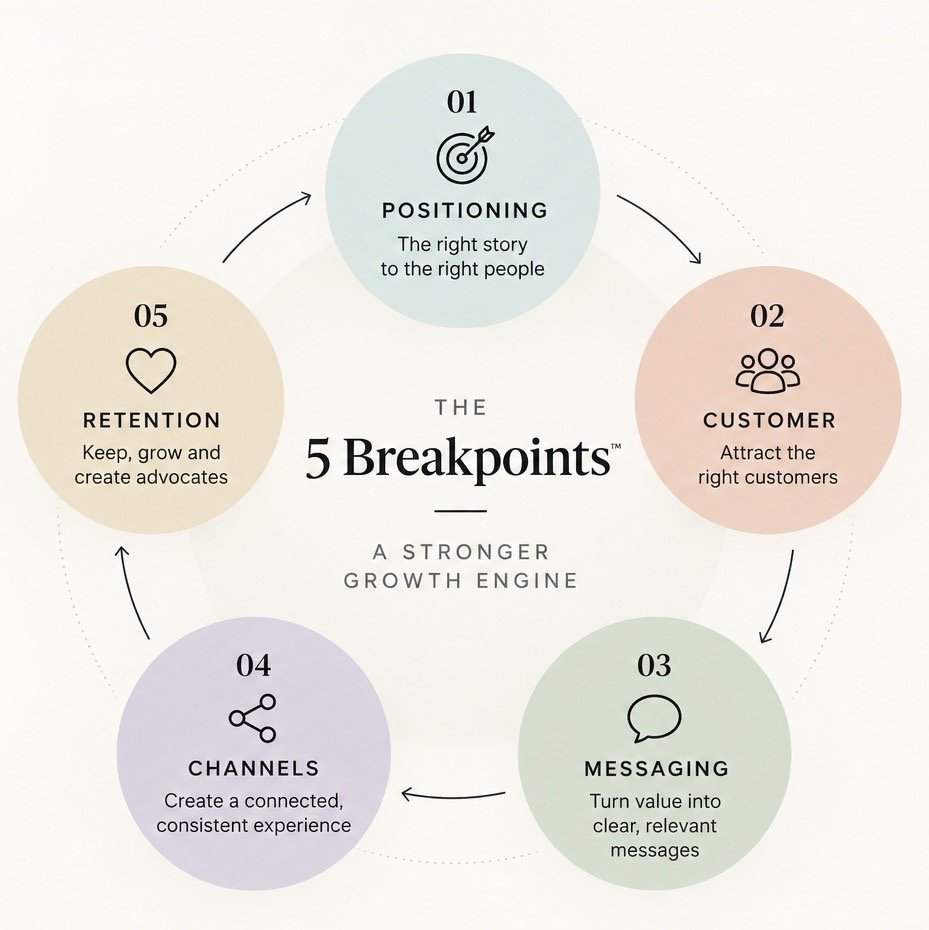
The 5 Breakpoints™
Most marketing problems aren’t random.
They usually break in the same five places.
A framework for finding what’s actually getting in the way of growth.
Different symptoms. Same problems underneath.
After more than two decades in marketing, I kept seeing the familiar patterns show up again and again. A campaign wasn't performing. Growth had stalled. Customers weren't sticking around. Teams were doing more marketing, but getting less clarity about what was actually working.
The symptoms looked different. The problems underneath were surprisingly consistent.
That's what became the 5 Breakpoints™
The five breakpoints that kill growth
These aren't execution failures. They're strategic breakpoints. Each one compounds the others. Fix the wrong one first, and nothing improves.
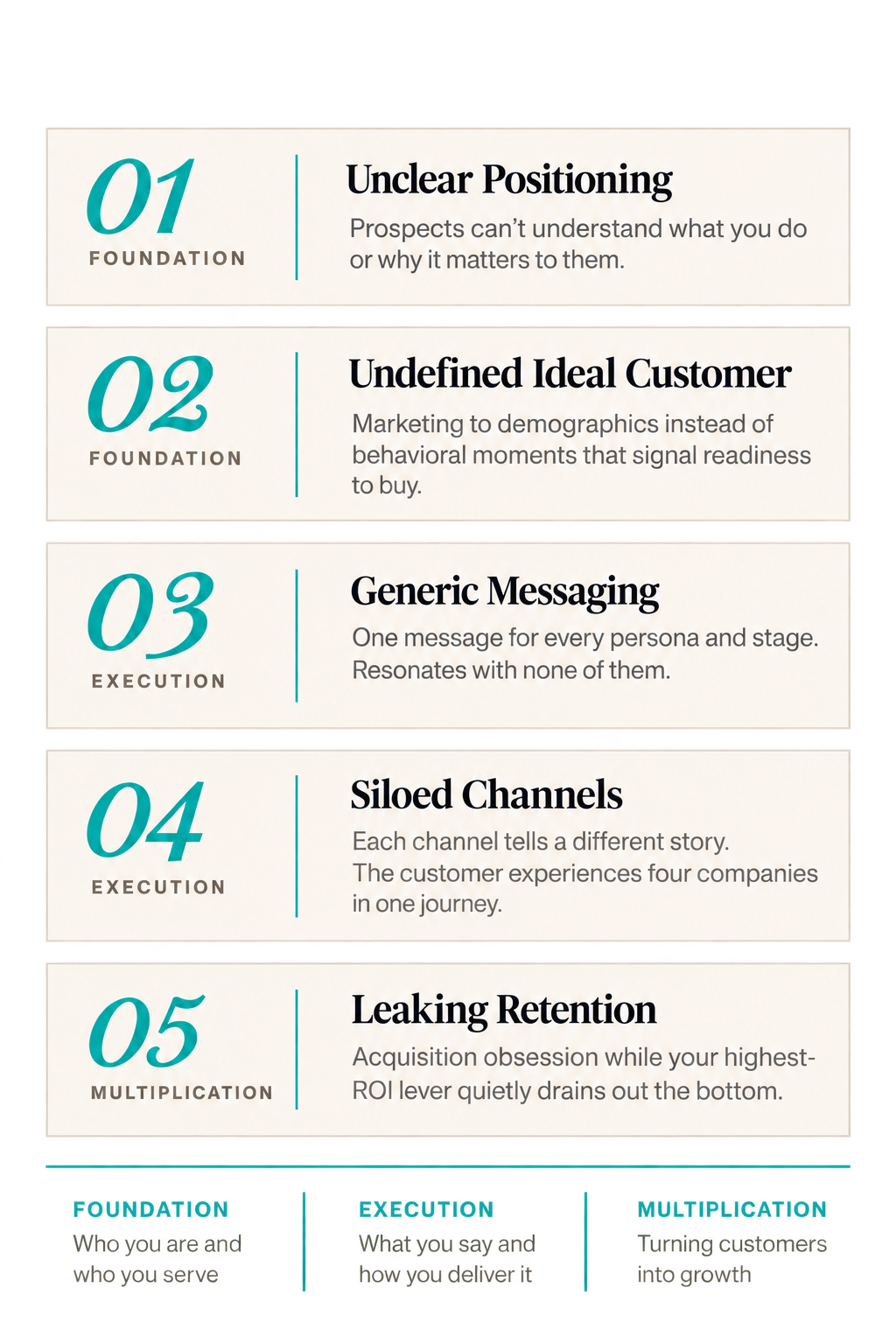
Ready to find your Breakpoint?
You’ve seen the five places where marketing commonly breaks down. Take the free 3-minute assessment to identify what may be holding your marketing back and what to focus on first.
Breakpoint 1
Unclear positioning
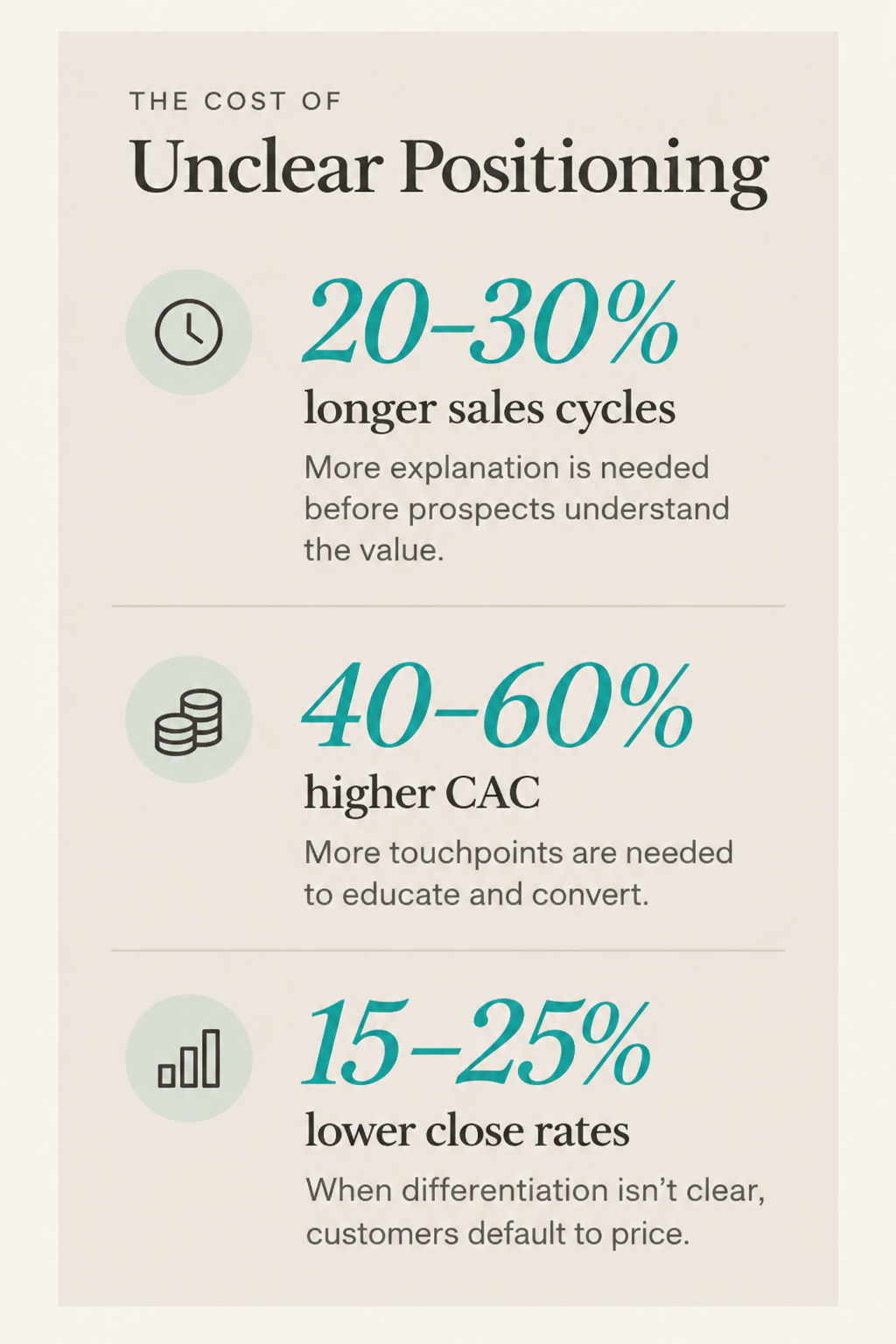
When prospects can't immediately grasp why your product matters, every downstream function compensates for that confusion. Sales cycles get longer. Onboarding requires more explanation. Customers arrive with wrong expectations.
The mistake is describing what you do instead of the problem you solve. Broad positioning can feel safer, but it often does the opposite. It gives customers fewer reasons to choose you.
Signs you're here
You use analogies to explain what you do ("we're the Uber for X")
Sales spends more time educating than selling
You're compared on price because unique value isn't clear
Your positioning tries to please everyone and ends up saying very little
Breakpoint 2
Undefined ideal customer
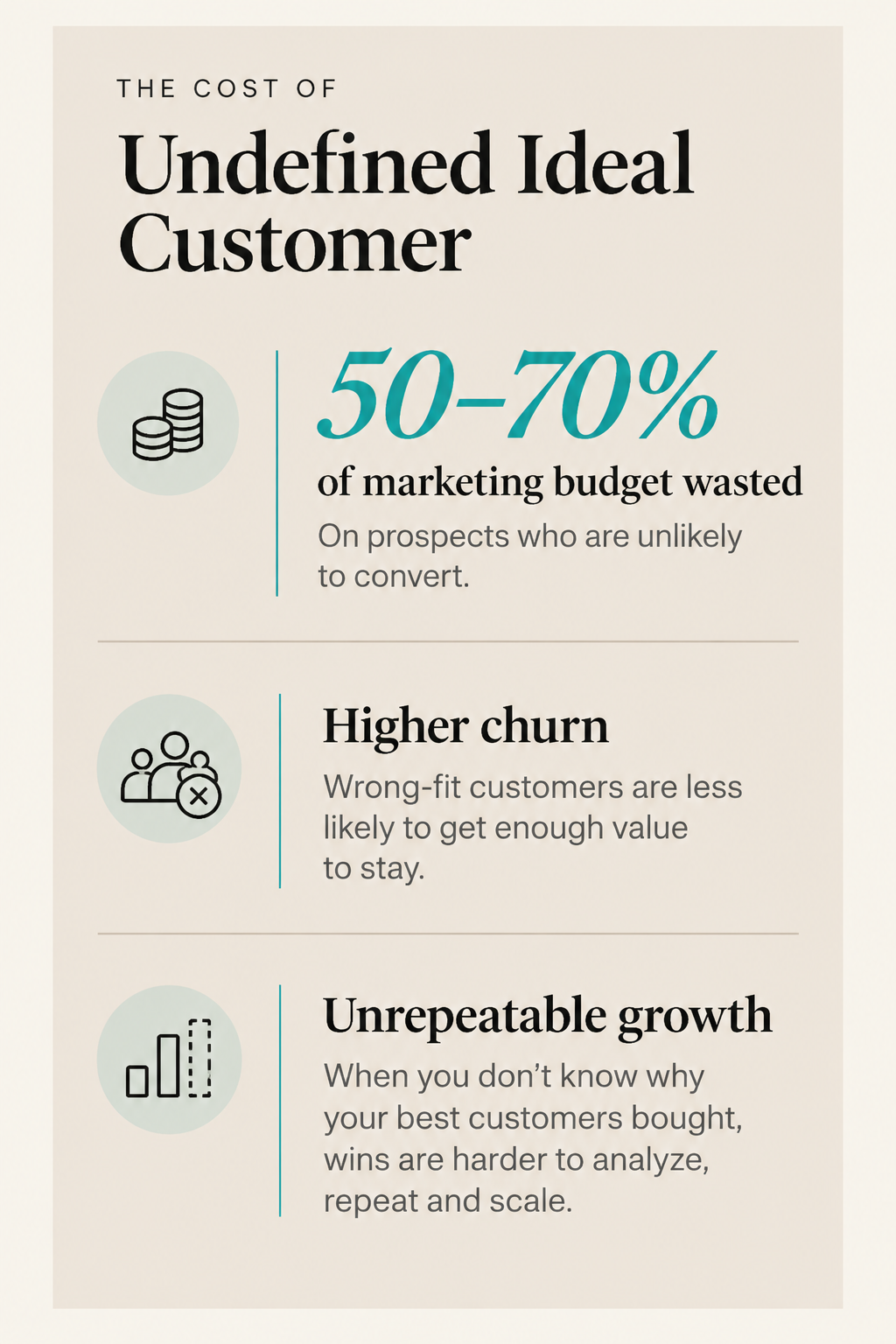
Demographic targeting tells you who might buy. Behavioral signals tell you who is more likely to be ready to buy now. Without the second, you're often marketing to a broad group and hoping the right people are listening.
One of the biggest clues is when your best customers don't quite match the target profile you've been marketing to. The people getting the most value from what you sell may not be the people your marketing was built around.
Signs you're here
You define your ideal customer mostly by demographics, industry or job title, rather than the needs and moments that make someone ready to buy
Sales spends significant time disqualifying leads from marketing
Results are good but difficult to repeat or predict
You haven't systematically studied why your best customers bought
Breakpoint 3
Generic messaging
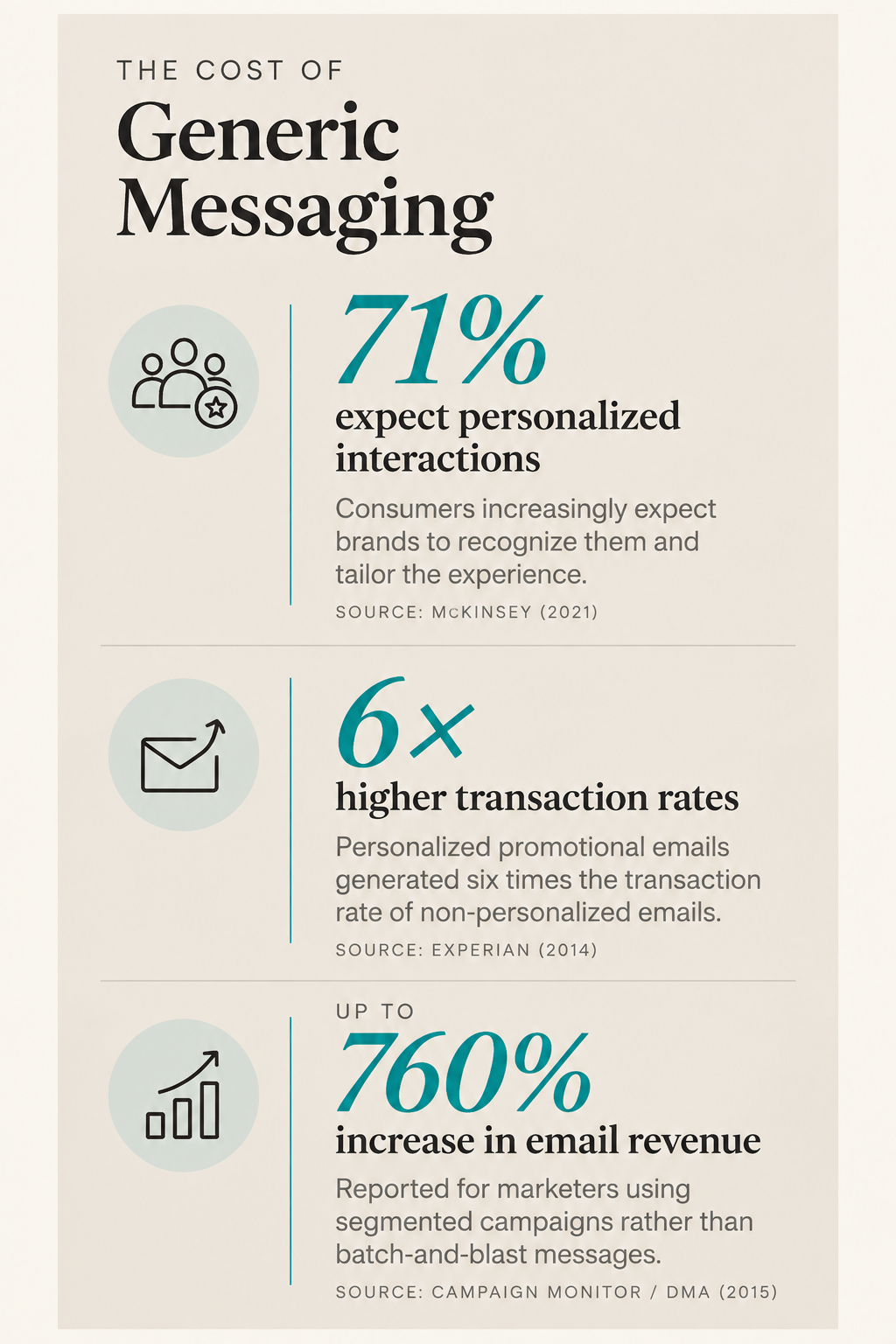
Using the same message for everyone isn’t a messaging strategy. It’s broadcasting. Someone discovering you for the first time needs something different from someone already comparing options or getting ready to buy.
When the message doesn’t reflect who the customer is, what they care about and where they are in the decision, even good content gets ignored.
A reliable signal: you keep creating more content because the content you already have isn’t doing enough to move people forward.
Signs you're here
You use essentially the same message across audiences and stages.
Your content talks more about features than customer problems.
You're producing more content without seeing a meaningful difference in response.
Customers regularly ask questions your marketing should already be answering.
Breakpoint 4
Siloed channels
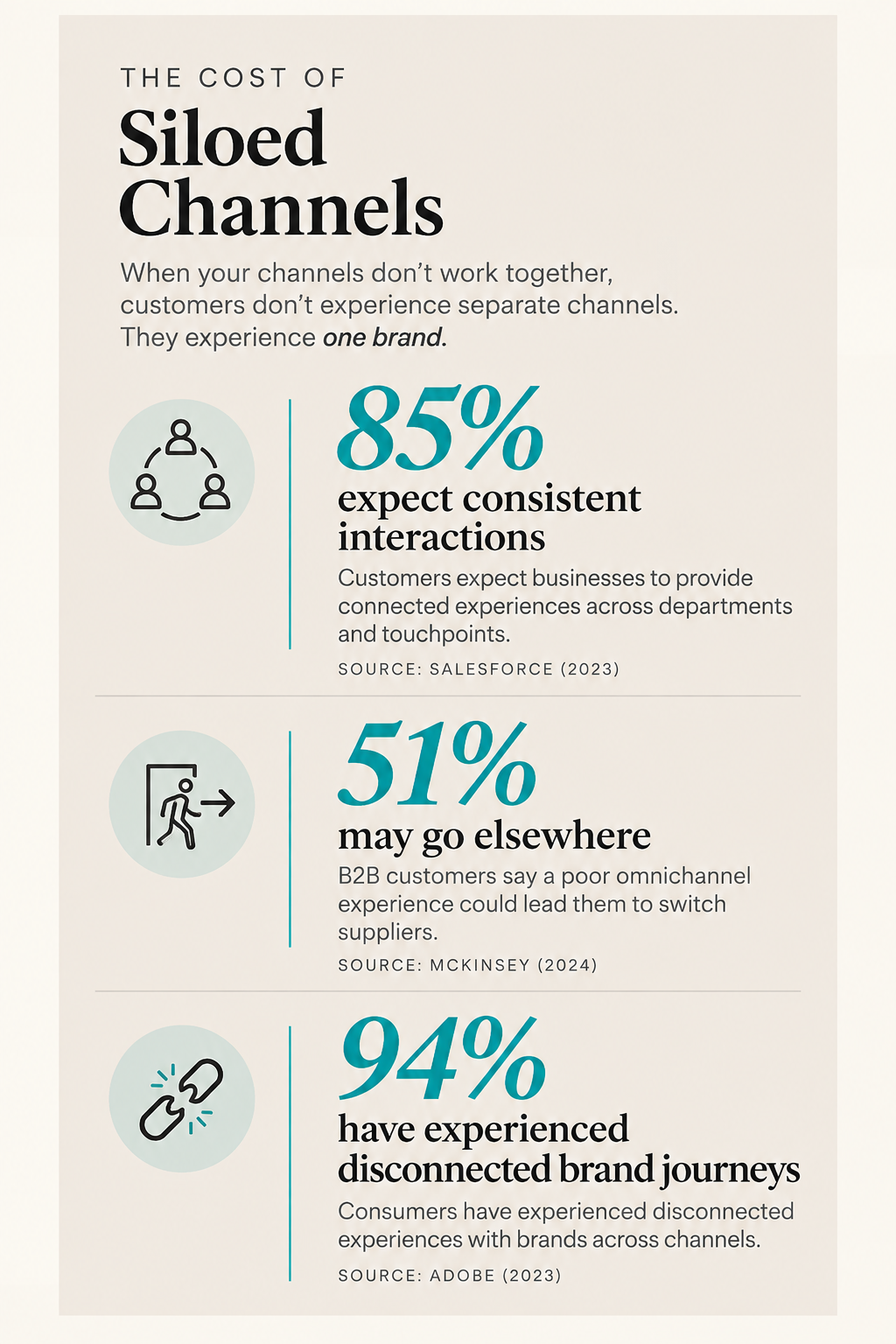
When social, email, paid media, your website and sales are all telling slightly different stories, the customer doesn’t experience separate channels. They experience one confusing brand.
The problem is rarely the individual channels. It’s that nobody is looking at how they work together across the customer journey.
Signs you're here
Your website, social, email and sales materials don't quite tell the same story.
Each channel is planned and measured separately.
You're spending time reconciling conflicting data and attribution.
You can't easily see how customers move from first interaction to purchase and beyond.
Breakpoint 5
Leaking retention
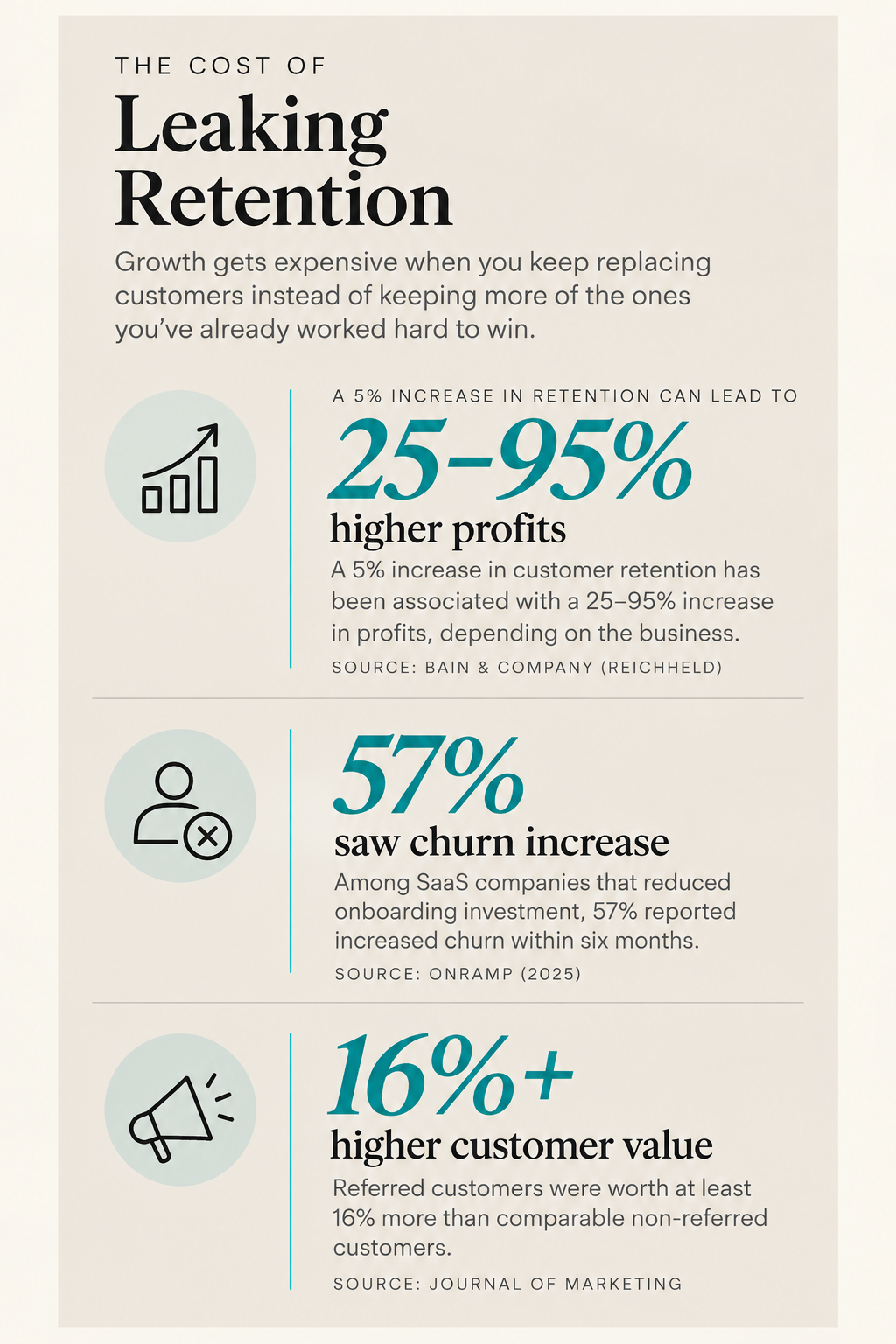
Growth gets expensive when you keep replacing customers instead of keeping more of the ones you've already worked hard to win.
Retention starts much earlier than a renewal or cancellation. It begins with the customers you attract, the expectations you set, how well you onboard them and whether they continue to see value after they buy.
Signs you're here
You're acquiring new customers, but overall growth remains flat.
Customers are left to figure too much out after they buy.
You learn why customers leave after they've already gone.
Happy customers exist, but you don't have a consistent way to turn them into referrals or advocates.
Why fixing the problem often doesn’t fix the problem.
The five Breakpoints don't operate independently. One can create problems somewhere else in the customer journey.
Weak positioning can make acquisition more expensive. The wrong customers can make retention harder. Generic messaging can make good channels look ineffective. And disconnected channels can make the whole experience feel inconsistent.
The goal isn't to fix everything at once. It's to identify the Breakpoint creating the most friction, then work outward from there.
Which breakpoint is slowing your growth?
If you'd rather talk it through, book a strategy call.
You can reach me on LinkedIn, or connect with me here to compare notes.
Ideas worth thinking about.